
Shoulder
Rotator Cuff Repair & Shoulder Surgery in Oklahoma City
The rotator cuff is a group of four muscles and their tendons that stabilize the shoulder joint and control arm rotation. Tears can occur from acute injury or from gradual degeneration over time. Treatment depends on the size and type of tear, the patient's symptoms, and functional demands.
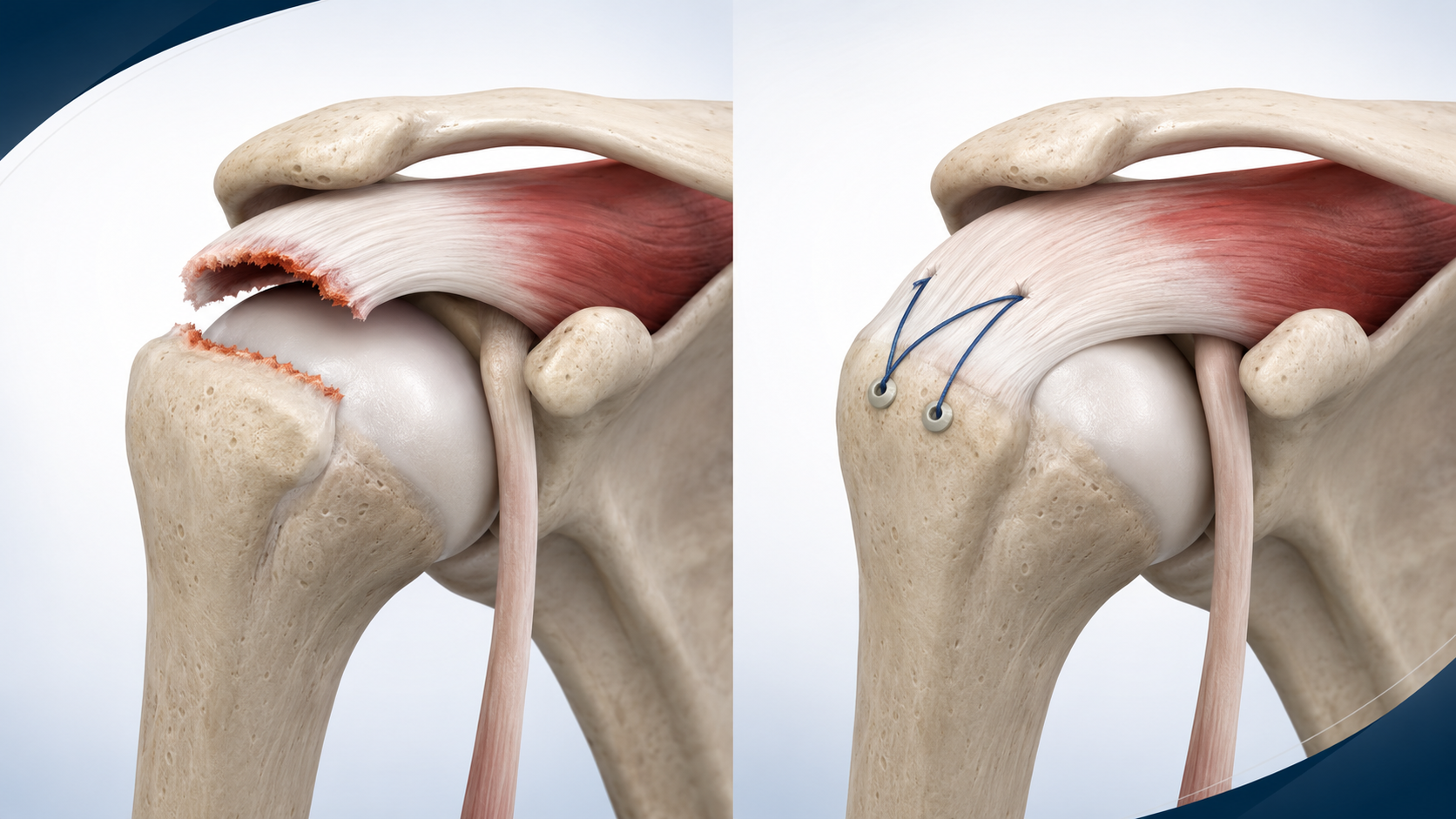
What this image shows
- The first view shows a full-thickness rotator cuff tendon tear separated from its attachment on the humerus.
- The repaired view shows the tendon returned to its footprint with suture anchors.
- The procedure selected depends on tear size, tendon quality, symptoms, function, and prior treatment.
Shoulder Surgeon in Oklahoma City
Patients searching for a rotator cuff doctor near me in OKC or arthroscopic shoulder surgery Oklahoma City are often dealing with a tear that has not responded to rest or physical therapy, or an acute injury that occurred during work, sport, or a fall. Dr. Joseph Blythe is a fellowship-trained orthopedic surgeon who evaluates and treats rotator cuff tears at his Oklahoma City practice.
The evaluation begins with a thorough physical examination and MRI review. Not every tear requires surgery — and Dr. Blythe will give you a direct, honest assessment of whether your tear is likely to heal with conservative care or whether surgical repair is the more appropriate path given your tear pattern, activity level, and functional goals.
Partial tears
Often managed with physical therapy, activity modification, and injections. Surgery reserved for cases that fail conservative care.
Full-thickness tears
Surgical repair is typically recommended for active patients with significant functional limitation or acute traumatic tears.
Large or massive tears
Require prompt evaluation. Tendon retraction and muscle atrophy worsen over time, affecting repairability.
Symptoms of a Rotator Cuff Tear
- Shoulder pain that worsens with overhead activity or reaching behind the back
- Night pain, particularly when lying on the affected shoulder
- Weakness when lifting the arm or rotating the shoulder
- A catching or grinding sensation with shoulder movement
- Difficulty with activities such as combing hair or reaching a high shelf
Treatment Options
Physical therapy
Strengthening of the surrounding shoulder musculature to compensate for a partial tear and reduce pain.
Corticosteroid injection
Injection into the subacromial space to reduce inflammation and provide temporary pain relief.
PRP injection
Platelet-rich plasma injection for selected partial tears, used to support tissue healing in appropriately evaluated patients.
Arthroscopic rotator cuff repair
Surgical reattachment of the torn tendon to the bone using suture anchors, performed through small arthroscopic portals.
Open or mini-open repair
Used for large or complex tears where arthroscopic repair alone is not sufficient.
When Surgery Is Recommended
Not all rotator cuff tears require surgery. Partial tears and small full-thickness tears in older, lower-demand patients often respond well to conservative treatment including physical therapy, PRP injections, and activity modification. For patients who want to explore orthobiologic options before committing to surgery, Dr. Blythe will advise whether PRP is appropriate for the specific tear pattern.
Surgery is generally recommended for full-thickness tears causing significant pain and functional limitation that has not improved with conservative care, for acute traumatic tears in active patients, and for large or massive tears where the tendon is unlikely to heal without surgical repair. The evaluation includes a thorough physical examination and MRI to characterize the tear. Dr. Blythe will explain the findings, the realistic options, and what outcomes are reasonable to expect based on the specific tear pattern and your functional goals.
Schedule a Consultation
Call the office or submit a request online. We will follow up within one business day.