
Lumbar Spine
Lumbar Disc Herniation and Sciatica | Oklahoma City
A lumbar disc herniation occurs when the inner material of a spinal disc pushes through its outer wall and presses on a nearby nerve root. When the sciatic nerve is affected, the result is sciatica: pain, numbness, or weakness that radiates from the low back into the leg.
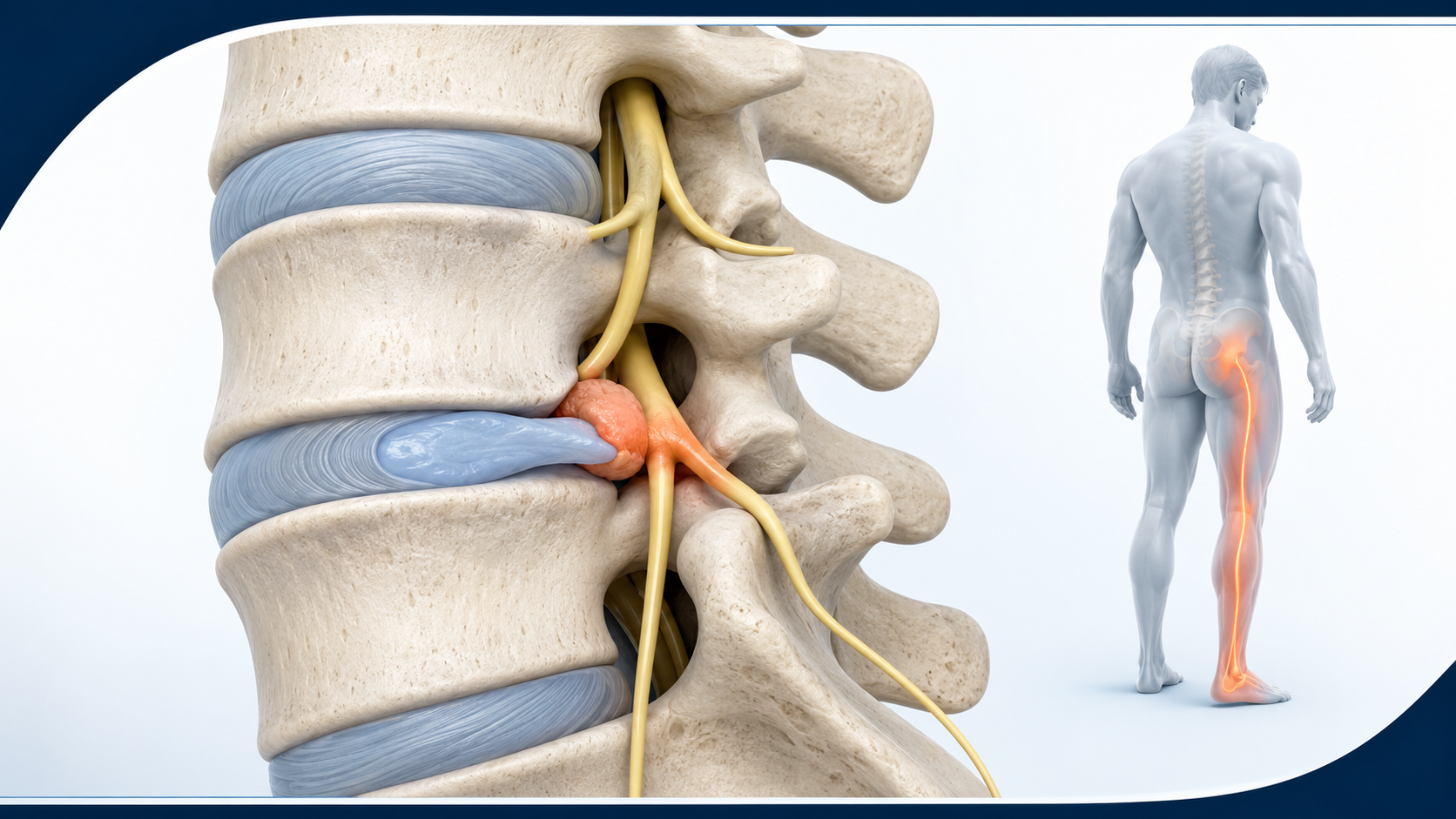
What this image shows
- Disc material has moved beyond its normal boundary and is pressing on one lumbar nerve root.
- The highlighted pathway shows how nerve irritation can produce pain from the back or buttock down one leg.
- A disc herniation is one possible cause of sciatica; the clinical examination and imaging determine the actual source.
Which Disc Level Is Affected?
The L4-L5 and L5-S1 disc levels account for the large majority of lumbar disc herniations. The specific level matters because each nerve root controls distinct areas of sensation and muscle function in the leg.
L4-L5 Herniation
Compresses the L5 nerve root. Symptoms typically include pain or weakness in the shin, weakness lifting the foot (foot drop), and numbness on the top of the foot or between the first and second toes.
L5-S1 Herniation
Compresses the S1 nerve root. Symptoms typically include pain radiating down the back of the leg to the heel or outer foot, weakness pushing off the foot, and a diminished ankle reflex.
Patients who have received an MRI report noting an L4-L5 disc herniation or L5-S1 disc herniation can expect Dr. Blythe to correlate those imaging findings with their specific symptoms and examination findings before any treatment decision is made. Imaging alone does not determine whether surgery is needed.
Symptoms
- Sharp, shooting pain from the low back into the buttock, thigh, calf, or foot
- Numbness or tingling along the path of the sciatic nerve
- Weakness in the leg or foot
- Pain that worsens with sitting, coughing, or sneezing
- Difficulty standing from a seated position
- In severe cases, loss of bladder or bowel control (requires urgent evaluation)
Treatment Options
Activity modification and rest
Short-term reduction in aggravating activities while the disc begins to heal.
Physical therapy
Targeted exercises to reduce nerve irritation and improve spinal mechanics.
Medications
Anti-inflammatory medications and short-course oral steroids for acute flares.
Epidural steroid injection
Fluoroscopically guided injection to reduce inflammation around the affected nerve root.
Endoscopic discectomy
Surgical removal of the herniated disc fragment through a small endoscopic working channel when conservative treatment has not provided adequate relief.
Natural History and Prognosis
Most lumbar disc herniations improve with time and conservative treatment. The herniated disc material is gradually reabsorbed by the body, and nerve irritation resolves in the majority of patients within six to twelve weeks. Surgery is not required for most patients.
When conservative measures including physical therapy, anti-inflammatory medications, and epidural steroid injections have not provided sufficient relief, surgery may be considered. Progressive neurological deficit such as worsening leg weakness is a more urgent indication. Endoscopic discectomy, when appropriate, removes the herniated fragment and relieves nerve compression through a small incision with minimal disruption to surrounding muscle and bone.
Schedule a Consultation
Call the office or submit a request online. We will follow up within one business day.