
Cervical Spine
Cervical Radiculopathy | Oklahoma City
Cervical radiculopathy occurs when a nerve root in the neck is compressed or irritated, causing pain, numbness, or weakness that radiates into the shoulder, arm, or hand. It is commonly caused by a herniated disc or bone spur at a cervical vertebral level.
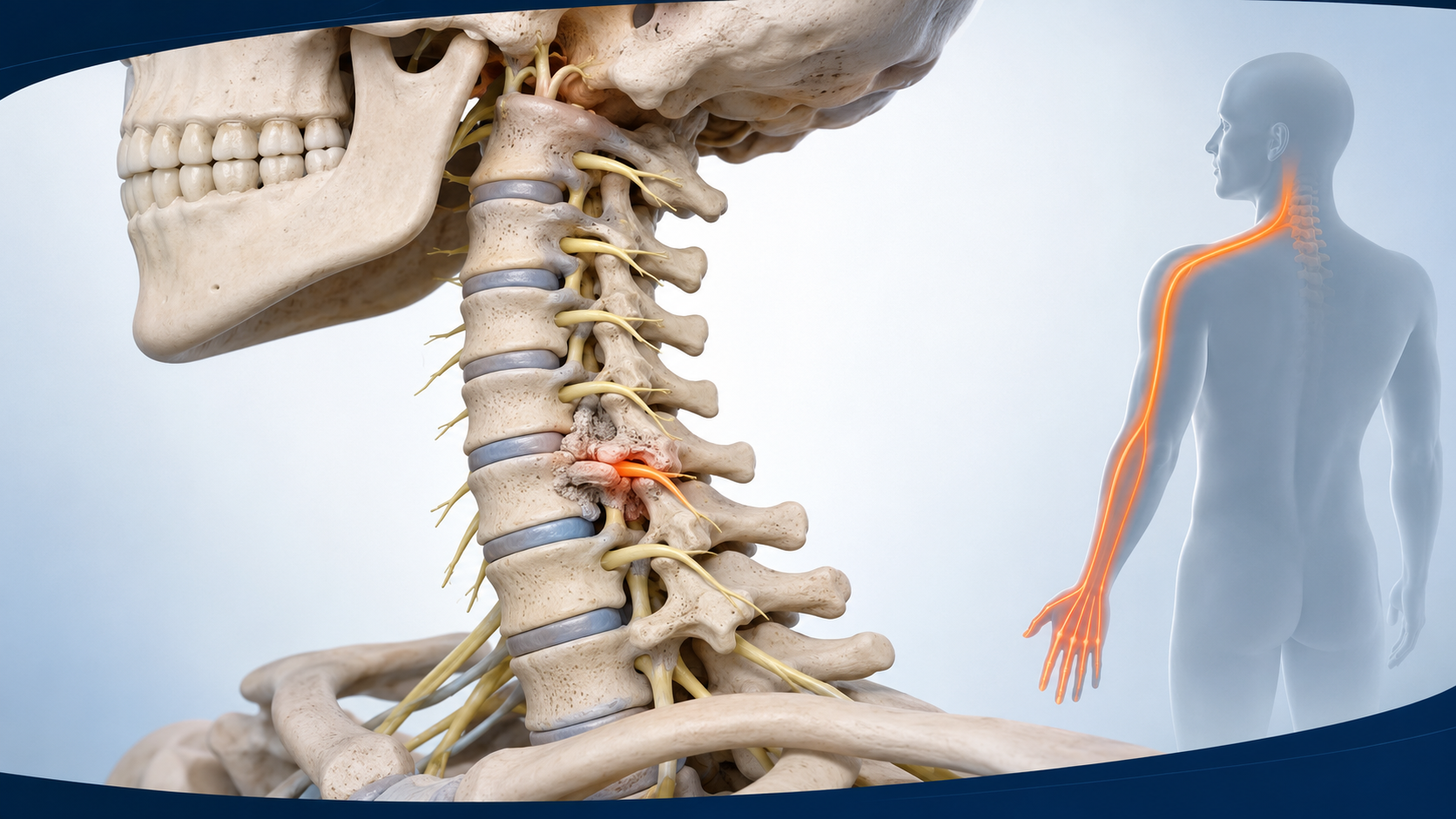
What this image shows
- A narrowed cervical neural foramen is compressing one exiting nerve root.
- The highlighted pathway shows how symptoms can travel from the neck through the shoulder and into one arm or hand.
- The affected nerve level helps determine the pattern of pain, numbness, reflex change, or weakness.
Cervical Radiculopathy Specialist in Oklahoma City
Patients searching for a cervical radiculopathy specialist in Oklahoma City — or looking for answers to questions like "why does my arm hurt when I turn my neck" or "pinched nerve in neck treatment OKC" — are often experiencing compression at a specific cervical disc level. The level identified on MRI correlates directly with the pattern of symptoms in the arm and hand.
C5-C6 (C6 nerve root)
Pain and numbness into the thumb and index finger; biceps weakness; diminished biceps reflex. One of the most common levels for a herniated cervical disc.
C6-C7 (C7 nerve root)
Pain into the middle finger; triceps weakness; diminished triceps reflex. The most frequently affected level in cervical disc herniation.
C4-C5 (C5 nerve root)
Pain and weakness in the shoulder and upper arm; deltoid weakness. Numbness typically does not extend below the elbow.
C7-T1 (C8 nerve root)
Numbness into the ring and little fingers; grip weakness. Often mimics ulnar nerve entrapment at the elbow.
Imaging findings are correlated with the clinical examination before any treatment decision is made. An MRI showing a disc herniation at a given level does not by itself determine whether surgery is needed.
Symptoms
- Sharp or burning pain in the neck that radiates into the shoulder, arm, or hand
- Numbness or tingling in the arm, forearm, or fingers
- Weakness in the shoulder, arm, or hand muscles
- Pain that worsens with certain neck positions
- Relief when raising the arm above the head (Bakody sign)
Treatment Options
Physical therapy
Cervical traction, manual therapy, and targeted exercises to reduce nerve irritation and improve cervical mechanics.
Medications
Anti-inflammatory medications and short-course oral steroids for acute radicular pain.
Cervical epidural steroid injection
Fluoroscopically guided injection to reduce inflammation around the affected nerve root.
Cervical discectomy and fusion (ACDF)
Surgical removal of the herniated disc or bone spur compressing the nerve root, with stabilization of the affected level.
Cervical disc replacement
An alternative to fusion for selected patients that preserves motion at the treated level.
Prognosis
Most cases of cervical radiculopathy improve with conservative treatment over weeks to months. The natural history is favorable for the majority of patients, and surgery is not required in most cases. Persistent or worsening symptoms — particularly progressive arm weakness — warrant re-evaluation to rule out cervical myelopathy or other causes of cord compression.
When surgery is indicated, Dr. Blythe performs minimally invasive cervical spine surgery including anterior cervical discectomy and fusion (ACDF) for appropriately selected patients. The specific approach depends on the level and nature of the compression, the number of levels involved, and the patient's overall clinical picture.
Schedule a Consultation
Call the office or submit a request online. We will follow up within one business day.