
Cervical Spine
Cervical Spinal Stenosis and Myelopathy | Oklahoma City
Cervical spinal stenosis is a narrowing of the spinal canal in the neck. When this narrowing compresses the spinal cord itself, the condition is called cervical myelopathy. Myelopathy is a serious condition that can progress without treatment and often requires surgical decompression.
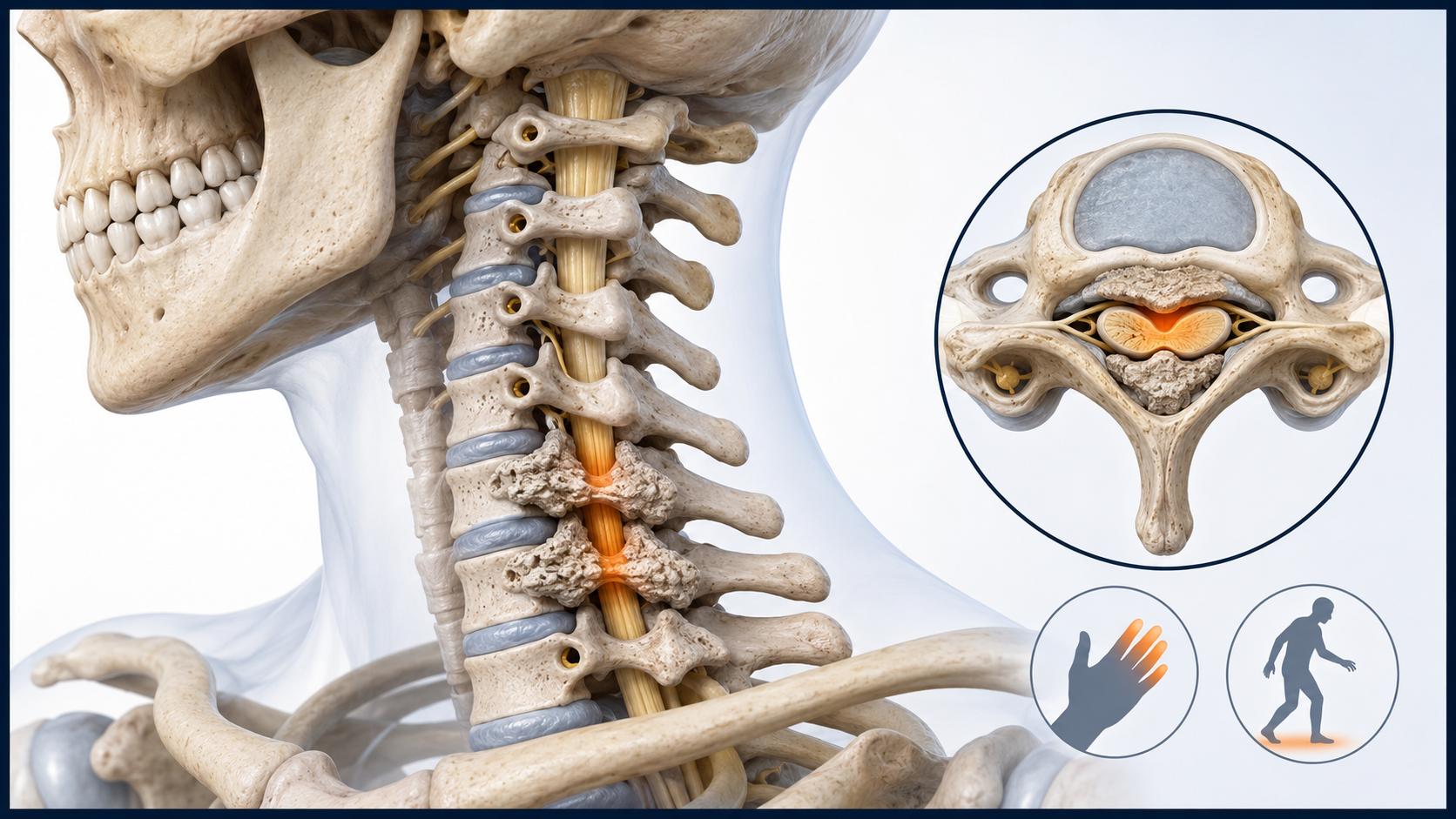
What this image shows
- Degenerative changes have narrowed the cervical spinal canal and are flattening the spinal cord.
- Spinal cord compression can affect hand coordination, balance, walking, and fine motor control.
- Myelopathy is different from an isolated pinched nerve and may require timely surgical evaluation.
Cervical Myelopathy Specialist in Oklahoma City
Patients searching for a cervical myelopathy specialist in Oklahoma City or answers to questions like "why am I dropping things and losing my balance" are often experiencing the early or progressive signs of spinal cord compression in the neck. These symptoms are frequently attributed to aging or other causes before the cervical spine is evaluated.
Spinal cord compression neck surgery in OKC — including cervical decompression for balance problems, hand weakness, and gait instability — is a core part of Dr. Blythe's practice. If you have received an MRI showing cervical canal narrowing, cord signal change, or cord flattening, a direct consultation with a fellowship-trained cervical spine surgeon is the appropriate next step.
Dropping objects or difficulty gripping
A hallmark of cervical cord compression affecting the hand pathways.
Balance problems or unsteady walking
Gait disturbance is one of the most reliable indicators of myelopathy.
Neck pain with arm or leg weakness
Multilevel symptoms suggest cord involvement rather than a single nerve root.
Symptoms of Cervical Stenosis and Myelopathy
- Neck pain and stiffness
- Arm pain, numbness, or tingling (radiculopathy)
- Weakness in the hands or arms
- Difficulty with fine motor tasks such as buttoning clothing
- Unsteady gait or balance problems
- Leg weakness or spasticity
- In severe cases, bladder or bowel dysfunction
Warning Signs That Require Prompt Evaluation
Cervical myelopathy can progress gradually and is sometimes mistaken for normal aging. The following symptoms warrant prompt evaluation:
- Progressive hand clumsiness or weakness
- Difficulty walking or frequent falls
- Worsening balance problems
- New bladder or bowel symptoms
Treatment
Cervical stenosis without myelopathy may be managed conservatively with physical therapy, activity modification, and medications. Injections may provide temporary relief for cervical radiculopathy symptoms when a single nerve root is the primary source of arm pain.
Cervical myelopathy — compression of the spinal cord — generally requires surgical decompression to stop progression and allow for neurological recovery. The goal of surgery is to remove the compressive pathology and stabilize the spine if necessary. Dr. Blythe performs minimally invasive cervical spine surgery and open decompression procedures including ACDF and cervical laminectomy. The specific surgical approach depends on the location and extent of compression, the number of levels involved, and the patient's anatomy.
Dr. Blythe will review your imaging, explain the findings, and provide a direct recommendation regarding whether and when surgery is appropriate.
Schedule a Consultation
Call the office or submit a request online. We will follow up within one business day.