Bone Marrow Aspirate Procedures: What Patients Should Know
Bone marrow aspirate procedures are performed in an operating-room setting for carefully selected patients. This article explains what the procedure involves, what the evidence shows, and what patients should realistically expect.
Bone Marrow Aspirate Procedures: What Patients Should Know
Bone marrow aspirate is a cellular product drawn from a patient's own bone marrow. It differs from PRP in its cellular composition and in how it is obtained and used. These procedures are performed in an operating-room setting and are reserved for carefully selected patients.
What Bone Marrow Aspirate Contains
Bone marrow contains a heterogeneous population of cells, including hematopoietic stem cells (which produce blood cells), mesenchymal stromal cells (which can differentiate into bone, cartilage, and fat under laboratory conditions), endothelial progenitor cells, and a variety of growth factors and cytokines.
The term "stem cell injection" is commonly used in direct-to-consumer marketing for bone marrow aspirate procedures. This terminology is misleading. The number of mesenchymal stromal cells in a bone marrow aspirate is small — typically less than 0.01% of the total nucleated cell population — and their behavior in vivo (in the body) differs substantially from their behavior in laboratory culture conditions. Bone marrow aspirate is not a stem cell cure, and it does not reliably rebuild cartilage or permanently reverse arthritis.
Whole Aspirate vs. Concentrated Aspirate (BMAC)
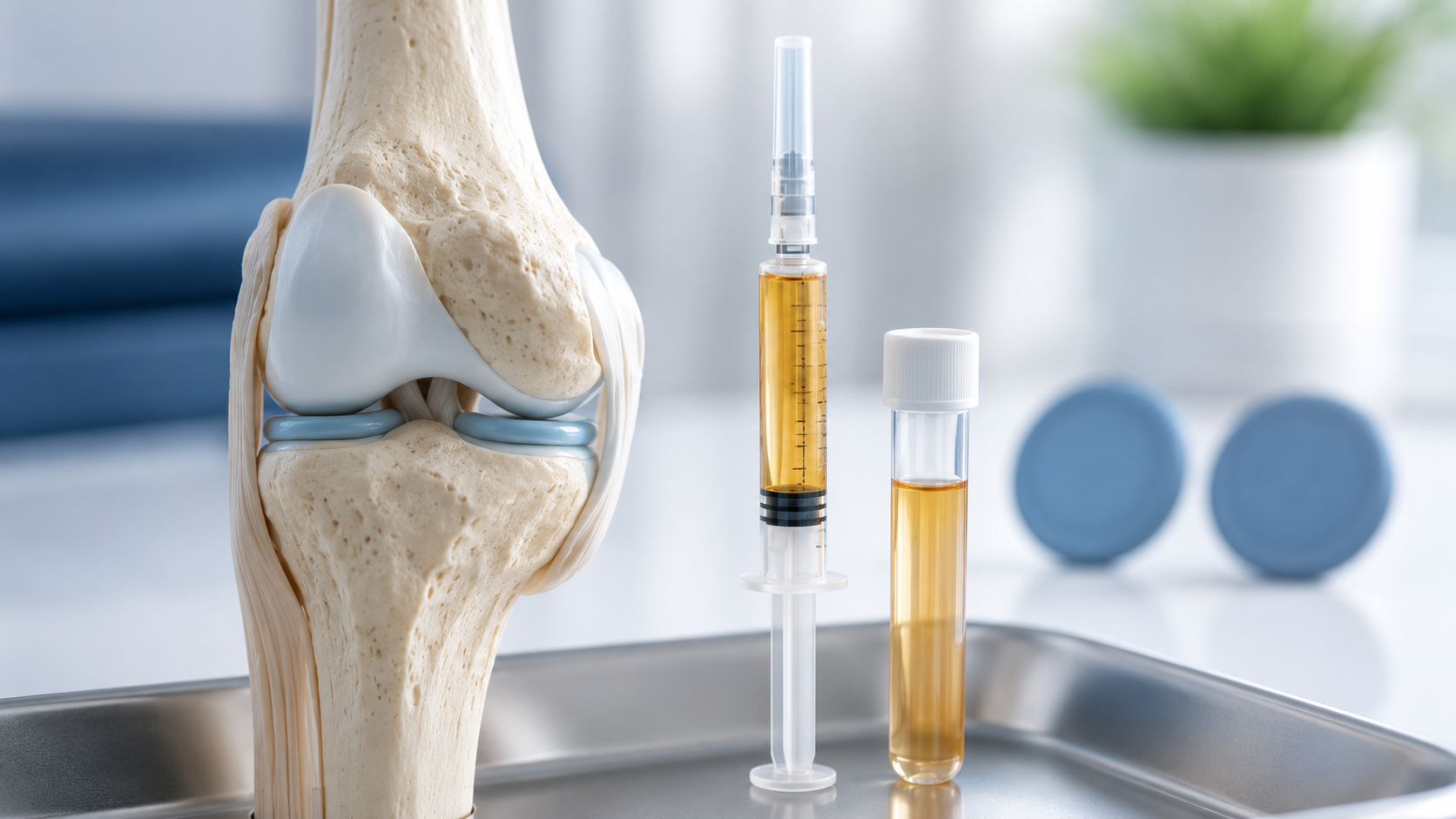
Bone marrow aspirate can be used as whole aspirate or processed to concentrate the cellular components — a product referred to as bone marrow aspirate concentrate (BMAC). Concentration is performed using a centrifuge system similar in principle to PRP preparation.
BMAC contains a higher concentration of nucleated cells, growth factors, and platelets than whole aspirate. Whether this concentration translates into meaningfully better clinical outcomes is an active area of research. Some studies suggest BMAC may be superior to whole aspirate for certain applications; others find no significant difference.
The Procedure
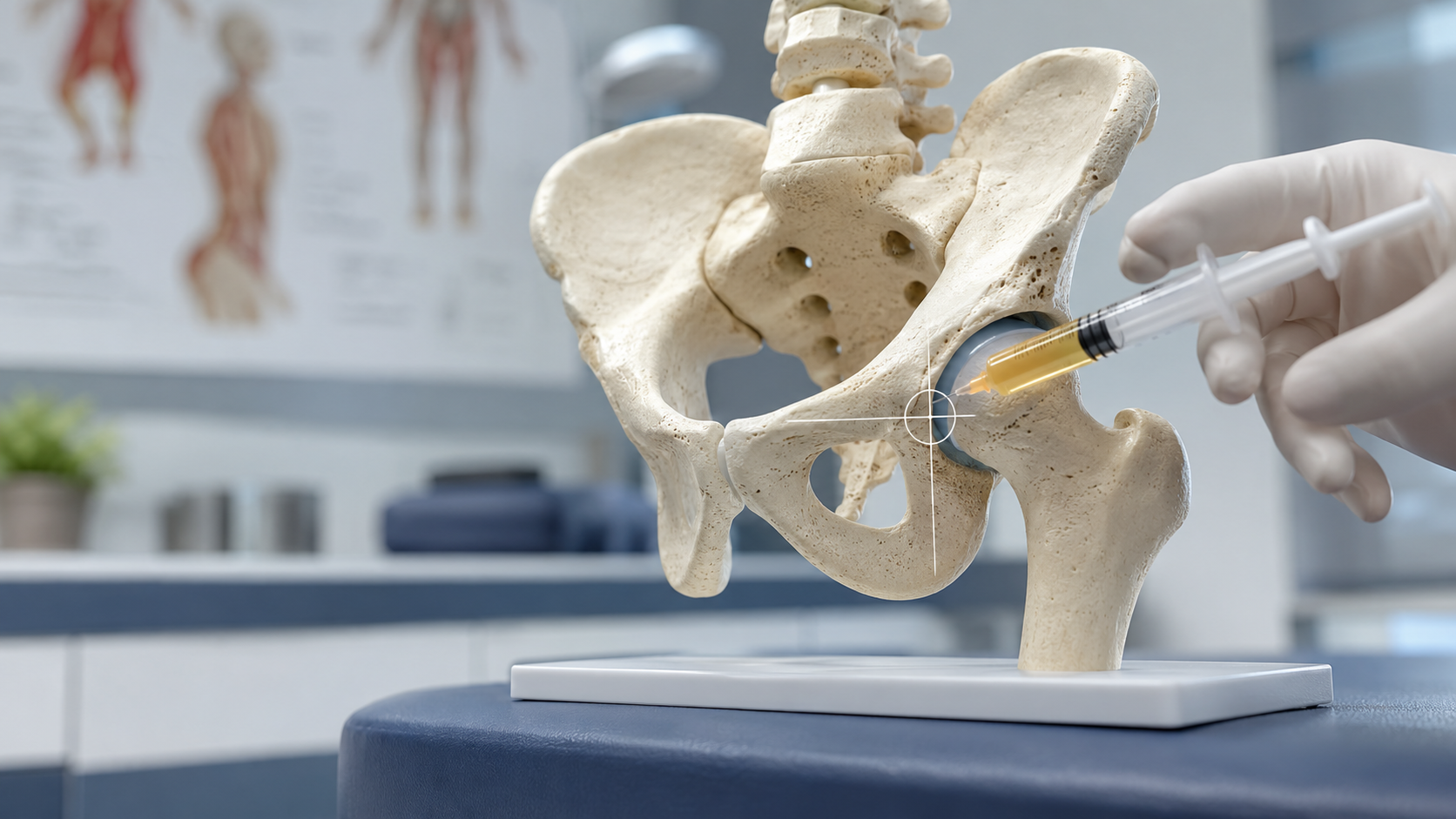
Bone marrow aspirate is harvested from the posterior iliac crest — the back of the pelvic bone — under sterile conditions. The procedure requires anesthesia (general or regional) and is performed in an operating-room setting. This distinguishes it from PRP, which is an office-based procedure.
The aspirate is processed and then used as an injection into the target joint or tissue, as a surgical adjunct at the time of another procedure (such as a fracture repair or cartilage procedure), or both. The specific use depends on the diagnosis and the treatment plan.
What the Evidence Shows
The evidence for bone marrow aspirate in orthopedic conditions is less mature than for PRP. Most published studies are case series, retrospective reviews, or small randomized trials.
Knee osteoarthritis: A 2016 randomized controlled trial by Centeno et al. (Stem Cells Translational Medicine, 2018; DOI: 10.1002/sctm.17-0198) compared BMAC to exercise control in 25 patients with knee osteoarthritis and found significant improvements in pain and function in the BMAC group at one year. However, this trial was small and lacked a sham injection control.
A 2021 systematic review by Chahla et al. (Cartilage, 2016; DOI: 10.1177/1947603516658643) found that BMAC produced improvements in pain and function for knee osteoarthritis in most published studies, but noted that the evidence is of low quality due to small sample sizes, lack of controls, and heterogeneous preparations.
Cartilage defects: BMAC has been studied as an adjunct to cartilage repair procedures, including microfracture and autologous chondrocyte implantation. A 2019 systematic review found that BMAC augmentation of microfracture may improve outcomes compared to microfracture alone, but the evidence is limited.
Contradictory evidence: A 2020 randomized controlled trial by Shapiro et al. (Journal of Bone and Joint Surgery, 2017; DOI: 10.2106/JBJS.16.00843) compared BMAC to saline placebo in 25 patients with knee osteoarthritis and found no significant difference in outcomes at 12 months. This well-designed negative trial is an important counterpoint to positive case series.
What This Procedure Is Not
Bone marrow aspirate is not a stem cell cure. It does not reliably rebuild articular cartilage. It does not permanently reverse osteoarthritis. Patients who have been told that bone marrow aspirate will "regrow their cartilage" or "cure their arthritis" have received inaccurate information.
The procedure is appropriate for carefully selected patients in whom the diagnosis, disease severity, and clinical picture support its use. It is not appropriate for every patient with joint pain, and it is not a substitute for surgery in patients who are appropriate surgical candidates.
Facility and Anesthesia
Because bone marrow aspirate procedures require an operating-room setting and anesthesia, facility and anesthesia charges are separate from the procedure fee. Patients should discuss the full cost of the procedure, including facility and anesthesia, before proceeding.
References
- Centeno CJ, et al. Increased Knee Cartilage Volume in Degenerative Joint Disease Using Percutaneously Implanted, Autologous Mesenchymal Stem Cells. Pain Physician. 2008;11(3):343–353.
- Shapiro SA, et al. A Prospective, Single-Blind, Placebo-Controlled Trial of Bone Marrow Aspirate Concentrate for Knee Osteoarthritis. J Bone Joint Surg Am. 2017;99(18):1541–1552. DOI: 10.2106/JBJS.16.00843
- Chahla J, et al. A Systematic Review of the Basic Science and Clinical Evidence on the Use of Mesenchymal Stem Cells in the Treatment of Cartilage Defects. Cartilage. 2016;7(3):198–210. DOI: 10.1177/1947603516658643
Reviewed by Joseph Blythe, DO — July 2026 Last medical review: July 31, 2026
Explore Topics

Written & reviewed by
Joseph Blythe, DO — Orthopedic Spine Surgeon
DO | Board-Certified Orthopedic Surgeon | Fellowship-Trained Spine Specialist
Dr. Blythe is a board-certified, fellowship-trained orthopedic and spine surgeon practicing in Oklahoma City. He completed his fellowship at the Spine Institute of Arizona and holds board certification through the American Osteopathic Board of Orthopedic Surgery (AOBO). All articles in the Patient Education Center are authored and medically reviewed by Dr. Blythe.